Storytelling Sandbox happens virtually on the fourth Friday of every month at 7PM Eastern. Sign up HERE or download the calendar event HERE
What if creativity wasn’t about being good enough?
What if it wasn’t about publishing a book, drawing the perfect picture, or performing flawlessly?
What if it was simply about exploring ideas, understanding yourself, connecting with others, and allowing yourself to play?
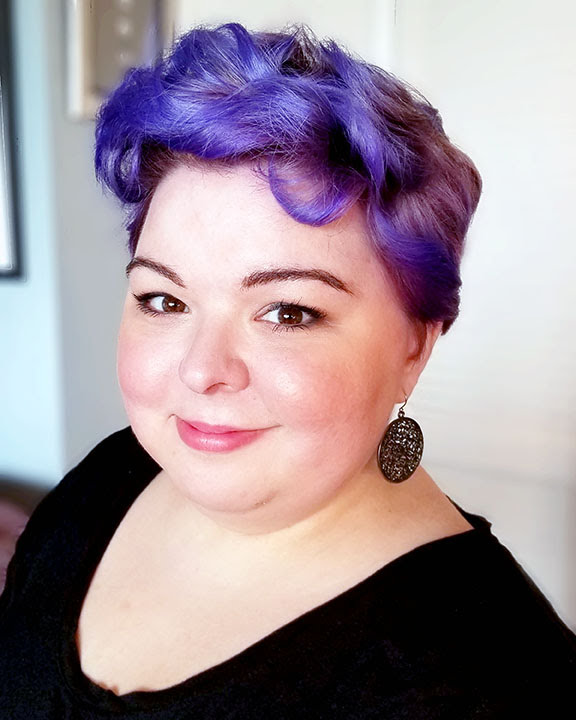
Those questions are at the heart of Storytelling Sandbox, AOG’s creative community led by Ash.
Drawing on years of experience in theatre production and a lifelong love of storytelling, mythology, media, and collaborative creation, Ash has built something intentionally different from a traditional writing group or art class.
“We came up with the name Storytelling Sandbox,” Ash explains, “because it’s not about being perfect. It’s about trying it out.”
Like children building castles in a sandbox, participants are encouraged to experiment, create something messy, tear it down, and try again.
“The mess stays in the sandbox until you have a finished castle you want to show off outside the sandbox.”
Stories are how humans understand the world.
Ash believes storytelling has always been one of humanity’s oldest tools.
“Humans created stories to understand why things are the way they are.”
Whether those stories are ancient mythology, oral traditions, novels, movie franchises, fandoms, or our favorite comfort shows, they become a shared language that helps us make sense of life.
But stories aren’t neutral.
“They can also be used as propaganda,” Ash says. “It’s very important now more than ever to understand why some stories are told and some are not, and where they came from.”
That’s why Storytelling Sandbox isn’t simply about writing fiction.
It’s about learning to ask why.
Why do certain stories resonate with us?
Why do we tell them?
Why do they matter?
Creating helps us rediscover ourselves.
Ash believes every creative work contains something deeply personal.
“If you listen to artists talk about their work, a lot of what is in their story is about lived experience.”
Sometimes those experiences appear in obvious ways.
Sometimes they’re hidden inside imaginary worlds, fantastical creatures, or fictional characters.
“When you create something, and then take a look at it—or have someone else look at it—you begin to see yourself in many different characters.”
That process becomes an exercise in empathy.
“Even villains didn’t wake up one day to be villains.”
As we explore characters, worlds, and relationships, we often find ourselves understanding not only others, but ourselves.
“You will start noticing why you love the stories you love, why they matter to you, and sometimes you’ll be reintroduced to yourself through your own creative process.”
Healing happens through connection.
Ash doesn’t see creativity and healing as separate things.
“To create something is to understand ourselves and others.”
The healing isn’t simply making something beautiful.
It’s allowing another person to encounter your work and discover something entirely different than what you intended.
“The connection to you and to others is the part that heals.”
Stories have always helped people process grief, uncertainty, injustice, and hope.
Ash points to The Lord of the Rings, inspired in part by Tolkien’s experiences during World War I, as one example of how art has long been a way of transforming painful experiences into something that helps others understand their own.
There are no creativity police here.
Storytelling Sandbox isn’t interested in telling people the “correct” way to create.
“There is always someone who tells you the rules for things,” Ash says. “This is not that kind of space.”
Instead, participants explore ideas together.
You can share a finished piece.
Read an unfinished paragraph.
Talk through an idea.
Ask for feedback.
Watch how other creators work.
Or simply listen.
Sometimes the group studies scenes from books, films, or theatre to understand how other artists solve creative problems.
Other times members collaborate on entirely new projects together—including ideas like an AOG fundraising skit show.
“There is a lot of freedom to explore,” Ash says. “It’s your moment if you choose to hold the space.”
Art belongs to everyone.
One thing Ash has learned from participants surprised them.
“There are a LOT of beautifully creative people who think they don’t have the right talents or skills to make something.”
Ash rejects that idea completely.
“Art has always been a human right.”
It’s part of how cultures preserve themselves.
Part of how people communicate.
Part of what makes us human.
Ash also challenges the idea that art must always be polished.
“Learning to decolonise our thinking about who gets to make art is how to make art messy again.”
“And people are beautifully messy.”
“We want to keep it that way.”
Stories shape communities.
Ash believes storytelling is far more than entertainment.
Communities are often defined by the stories told about them.
Sometimes those stories are told by outsiders who misunderstand them.
Sometimes entire groups become invisible.
Creating and sharing our own stories changes that.
“When you start taking up space,” Ash says, “someone else may tell you that you inspired them to speak.”
“There is an empowering feeling in knowing you helped someone else be seen.”
Storytelling has also always been a form of resistance.
“Storytelling has always been a resistance to power.”
Oral traditions, folklore, myths, and community stories have long preserved knowledge, challenged authority, and protected cultures from erasure.
“The arts and storytelling are tools to combat fascism and erasure.”
More than a creative group.
Ash hopes Storytelling Sandbox continues growing into something much larger than a monthly meeting.
Future dreams include inviting guest artists to answer questions, helping members find editors and collaborators, creating production teams, following one another’s projects, and providing accountability for creative goals.
“We’re in a viewing and following economy,” Ash says. “Having more eyes on your work, learning tools together, connecting people with one another—that’s the kind of arts-to-arts support group I hope we build.”
Just show up.
If someone is wondering whether they’re “creative enough,” Ash has a simple answer.
“Bare minimum, show up.”
“You don’t have to have written a single thing.”
“You can come with an idea.”
“You can come with nothing at all.”
“You can simply come to see what’s cooking.”
“Everything beyond that is a bonus.”
Because, as Ash reminds us,
“You are a living story, and you get to choose to share it. I hope one day you do.”